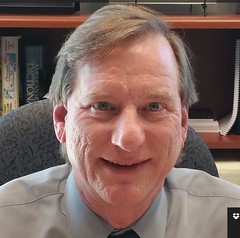
Dennis Linders (Local Government)

As a CountyStat Analyst in the Office of the Montgomery County Executive and a PhD candidate at the University of Maryland, I help public administrators use data to solve problems and deliver results for residents. This work builds from two formative experiences earlier in my career: working on IT strategies with federal agencies at the start of the Obama administration’s Open Data Initiative and then studying the emergence of “smart city” innovations at the World Bank, as leading cities began to leverage data from sensors, connected citizens, and “big data” information systems to help make smarter decisions.

My experience of working with cities across the world at the World Bank led to a new appreciation for local government—and an awareness that, in this time of partisan gridlock, government innovation increasingly takes place at the local level. This led me to Montgomery County, where data informs everything that we do. For instance, to promote accountability, we annually assess the performance of all County departments through over 400 data-driven performance measures shared via online dashboards. To ensure customer service excellence, we use open data on citizen service requests to track the responsiveness of County departments in real-time.

Importantly, we also use data as a platform for collaborative problem solving. For instance, the CountyStat team mapped out pedestrian collisions to identify hotspots and target the activities of engineers, police officers, and public information officers; assessed community data to identify demand for English language training and potential gaps in coverage across 25+ service providers; and translated troves of community and government databases into actionable insights to help shape the County’s upcoming senior strategy in partnership with a dozen County departments and a multitude of community partners.

More and more local governments, regionally and nationally, are similarly recognizing the power of data and implementing data-driven programs like CountyStat. Together, we are jointly giving rise to a new profession within public administration—the “government data scientist”—as we use data and analytics to tackle public problems and improve the performance of government.

Dennis can be contacted at dlinders@umd.edu and dennislinders.com. He also invites you to read his “smart city” chapter in the recently published World Bank – World Development Report 2016, available at bit.ly/wdr-smartcities.

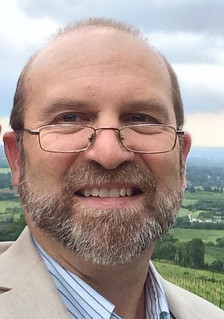
W. Michael McDavit (Federal Government)

Call me Mike. I am currently the Chief of the Wetlands Strategies and State Programs Branch, Wetlands Division, Office of Wetlands, Oceans and Watersheds, Office of Water, U.S. Environmental Protection Agency in Washington, DC. I lead a small unit that administers technical and financial assistance agreements for improving State and Tribal wetland protection programs. I also oversee the recurring National Wetland Condition Assessment, a national assessment of the ecological health of the Nation’s wetlands. The very first national survey in the series of nearly 1,200 wetland sites across the lower 48 is scheduled to be released in May, which also happens to be American Wetlands Month. In my current position, I collaborate with other federal agencies on special projects concerning the protection and restoration of wetland resources, such as the Interagency Coastal Wetland Working Group. I hold a BS in Environmental Science from the University of Wisconsin at Green Bay and a MPA from the George Washington University. Born and raised in the Washington, DC area, I am a third generation federal bureaucrat.

I am also Senior Fellow with the Partnership for Public Services’ “Excellence in Government” leadership program, an officer in ASPA’s Section on Environmental and Natural Resources Administration and a member of the Ecological Society of America. My 34 year federal career has spanned a variety of environmental disciplines, including regulation of pesticides, management of hazardous waste, and air and water pollution source control. During nine years abroad with the Department of Defense, I managed the U.S. military’s hazardous waste in Europe and helped close U.S. bases after the fall of the Berlin Wall. I also set up the first hazmat service program for U.S. troops in Southwest Asia after Operation Desert Storm. On the academic side, I currently teach environmental biology at Montgomery College, Germantown, MD and serve on the faculty of the annual “Washington Youth Summit for the Environment” at George Mason University. My wife, Kim, is a singer and piano teacher, and his son Grady is studying Irish dance/music at the University of Limerick, Ireland.

Contact information: mcdavit.michael@epa.govmcdavit.kimc@verizon.net.

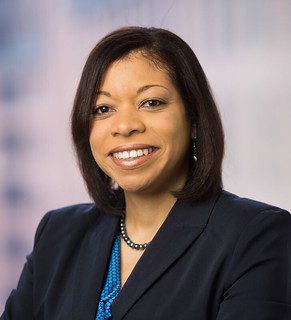
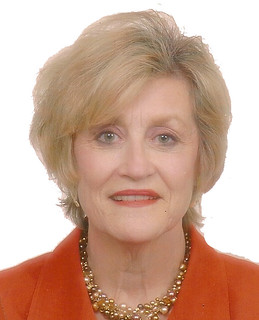
Becky L. Schergens (Nonprofit)

I am the National Advisor at the National Women’s History Museum. My career path has been nothing short of nomadic. I arrived in Washington, DC with a degree in government from Southern Methodist University and plunged into working at the DC office of the City University of New York (CUNY) and American Association of Museums as well as being a staff assistant to three Secretaries at the Department of Health, Education and Welfare. At last, I became a Deputy Assistant Secretary (Policy Communication) in the Education Division. In those days, women usually had to move in a zig zag fashion to achieve the next step.

My next stop was Chicago where I had been selected as the first Executive Director of the National PTA (I have no children). Later I moved to Denver and earned my MPA from the University of Denver. Upon graduation, the President of the University of Houston – Clear Lake offered me a position to partner with the Houston Chamber of Commerce in economic development. Ultimately I became the first Vice President for Institutional Advancement at UHCL. Why is all of this information necessary to working in non-profits?

This long journey convinced me that my public service was best utilized in the non-profit world. I literally came full circle back to Washington, DC to find that virtually all of my skills and experience in public administration were useful in the non-profit world. For the past 14 years, I have served as the National Advisor to the National Women’s History Museum. In that role, I developed the initial strategic plan to create a National Coalition of women’s organizations to support the establishment of a Women’s History Museum in the Nation’s Capital. I continue to work with and expand the Coalition, which now includes 54 organizations.

Primarily online, the National Women’s History Museum offers a diverse collection of biographies, digital exhibits, and lesson plans for teachers and women’s history enthusiasts. Presently, a Congressional Commission is conducting a feasibility study and is scheduled to present a report to the Congress in November 2016 about the future of the Museum.

My biggest joy has been working with the 54 Coalition organizations and the remarkable women who have served as their leaders. Together we continue to build support for our vision of a bricks and mortar National Women’s History Museum in Washington, DC which will “educate, inspire, empower and shape the future by integrating women’s distinctive history into the culture and history of the United States.”

To learn more about the museum, visit www.nwhm.org.

Hello world!

Welcome to WordPress. This is your first post. Edit or delete it, then start blogging!

Categories: ASPA News