America 250: Jefferson v. Hamilton Ideals on Governance

Submitted by NCAC Board Member, Ryan Heimer

Jefferson’s ideal was rooted in liberty, restraint, and distrust of concentrated power. He believed republican government worked best when authority remained close to the people, when the national government was limited, and when public life was anchored in civic virtue rather than bureaucracy or financial centralization. Jefferson feared that too much federal power would reproduce the corruption and hierarchy Americans had just rejected. His vision leaned toward a stricter reading of constitutional power and a belief that self-government flourished best in decentralized institutions. 

Hamilton’s ideal, by contrast, centered on energy, capacity, and national cohesion. He believed the young republic would fail without a strong central government able to stabilize finances, maintain public credit, coordinate national policy, and command public confidence. Hamilton did not see government strength as the enemy of liberty; he saw it as the condition for survival and prosperity in a fragile new nation. His political outlook favored broader constitutional interpretation and durable national institutions capable of turning revolutionary aspiration into effective governance. 

This was never merely a personal rivalry. It was a foundational disagreement over the purpose of government itself. Jefferson asked how liberty could be preserved against overreach. Hamilton asked how the republic could endure without administrative strength. Jefferson worried about power becoming distant from the people. Hamilton worried about the government becoming too weak to govern at all. Both concerns remain familiar to anyone working in public administration today. 

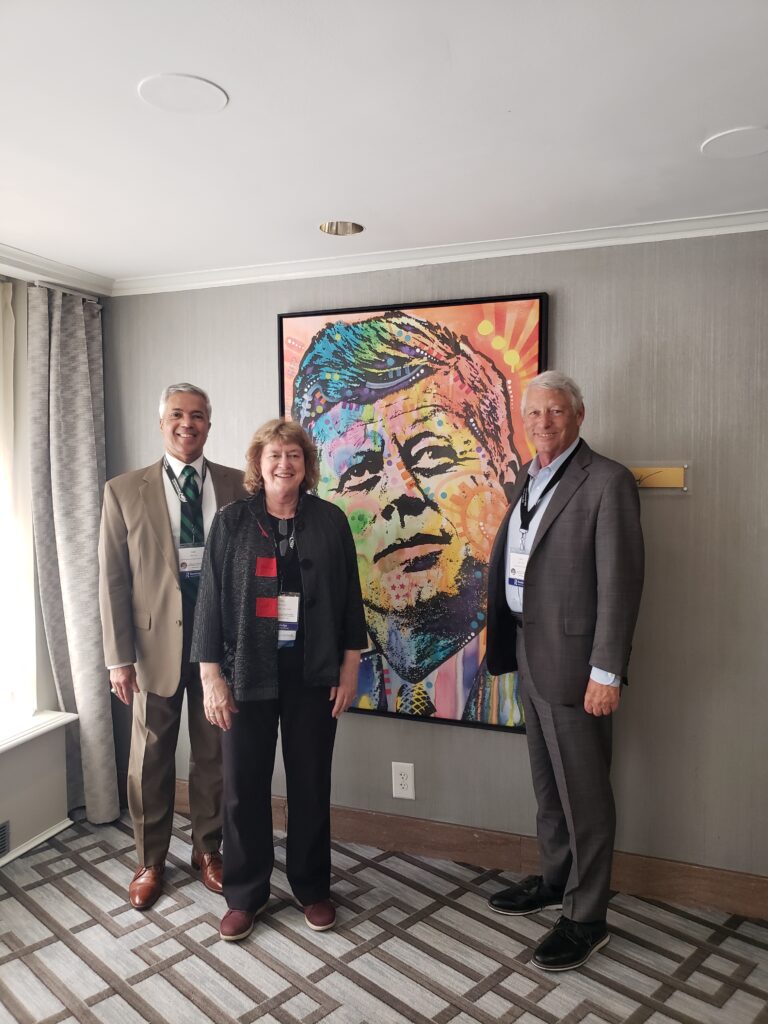
Jefferson v. Hamilton 

That is why the Semiquincentennial is such a useful civic moment. It encourages reflection not only on what the founders said, but on what public servants must do. Modern administrators work in institutions that carry both Jeffersonian and Hamiltonian inheritance. When they defend transparency, local responsiveness, civic trust, and constitutional restraint, they echo Jefferson. When they build competent agencies, manage public resources, coordinate across jurisdictions, and respond to national crises with professionalism and scale, they echo Hamilton. The daily work of public administration often lies in balancing both traditions rather than choosing one absolutely. 

Thomas Paine adds another important dimension to this conversation. His writings pressed the revolutionary generation to see government as a public instrument tied to the welfare of ordinary people, not merely the privilege of elites. Paine’s moral urgency helps connect the Jefferson-Hamilton debate to the ethical core of public service: government must be judged not only by its structure, but by whether it serves the common good. In that sense, the question is not simply whether one prefers limited government or strong government, but whether public institutions are acting with legitimacy, competence, and fidelity to the public they exist to serve. 

For today’s public administrators, that may be the most valuable lesson of all. The founding era did not leave behind one settled blueprint. It left behind a constitutional democracy shaped by argument; between liberty and capacity, localism and nationhood, restraint and action. The enduring strength of the American government has often come from wrestling with those tensions rather than pretending they do not exist. As the nation nears its 250th birthday on July 4, 2026, public servants have an opportunity to frame their work within this longer civic tradition. The American experiment has always depended on people willing to translate ideals into institutions and principles into practice. Jefferson reminds us that the government must remain accountable to liberty. Hamilton reminds us that liberty without effective governance can become fragile and unprotected. Between them lies the continuing challenge of democratic administration: building a government strong enough to serve, but restrained enough to remain the people’s own. 

Reflecting on the works of Jon Meacham’s The Soul of America adds another layer by emphasizing that democratic resilience depends not only on constitutions and institutions, but on civic character. American democracy has survived not because it avoided conflict, but because enough citizens and leaders chose responsibility over cynicism at key moments. That idea is especially meaningful for public administrators. Administrative work often appears procedural, technical, and routine. Yet much of democratic life is preserved through ordinary acts of competence, honesty, and fairness. The Soul of American does just state government is not found only in founding documents or great speeches. It is also found in the daily, disciplined work of public servants who keep institutions trustworthy. 

Governing in the Age of Artificial Intelligence

Submitted by Board Member, Ryan Heimer

Technology Policy, Democratic Institutions, and the Future of Public Administration 

The relationship between government and technology has entered a new phase. In earlier eras, public administration often treated technology as a supporting function that has been important for efficiency, recordkeeping, and communication, but secondary to the central tasks of policy design, budgeting, and implementation. That distinction is becoming increasingly untenable. Artificial intelligence, semiconductor supply chains, digital platforms, cloud infrastructure, and data governance now shape not only how governments operate, but also how they exercise authority, maintain legitimacy, and deliver public value. 

Recent works on technology and governance including Chris Miller’s Chip War, Jennifer Pahlka’s Recoding America, and Alexander C. Karp and Nicholas W. Zamiska’s The Technological Republic. They offer a particularly useful framework for understanding this transformation. Although these works approach the subject from different vantage points (geopolitical competition, bureaucratic reform, and national strategy) they converge on a shared conclusion: the ability of governments to understand and manage technology is increasingly inseparable from the broader question of effective governance. 

My hope is the outline within these texts, when read alongside contemporary AI policy efforts such as the Build American AI initiative, the White House National Policy Framework for Artificial Intelligence, and research on municipal AI readiness, point toward a major shift in the field of public administration. Technology policy is no longer a specialized issue confined to technical agencies or information technology offices. Rather, it is becoming central to democratic governance itself. Public administrators must therefore develop not only traditional competencies in management and policy analysis, but also the institutional, strategic, and ethical capacity to govern in an increasingly technological society. 

Technology as a Question of State Capacity 

Chris Miller’s Chip War provides the broadest strategic context for understanding why technology has become so important to governance. Miller’s central contribution is to show that semiconductors are not simply commercial products; they are a form of strategic infrastructure underpinning economic power, military capability, and technological leadership. Modern economies depend on chips to power everything from smartphones and automobiles to artificial intelligence systems and advanced defense platforms. As a result, semiconductor production and supply chains have become a core arena of geopolitical competition. 

For public administration, the significance of this argument lies in its implications for state capacity. Governments have historically treated infrastructure such as roads, ports, water systems, and electric grids. Now foundational to national development and public welfare. Chip War suggests that advanced technological production now occupies a similarly foundational role. The ability to access and sustain semiconductor capacity is increasingly tied to economic resilience, innovation potential, and national security. 

This insight is especially important because it broadens how public administrators must think about technology. The issue is no longer simply whether agencies possess updated software or modern information systems. Rather, it is whether the state as a whole possesses the institutional and strategic capacity to operate in an environment where technological dependencies shape policy outcomes. In this sense, Miller reframes technology not as a narrow policy area but as an essential component of modern statecraft. 

Institutional Failure and the Administrative Problem 

If Chip War explains why technology matters strategically, Jennifer Pahlka’s Recoding America explains why governments often fail to use it effectively. Pahlka’s analysis is less concerned with geopolitical rivalry than with the ordinary functioning of the administrative state. Her central claim is that many public-sector technology failures are not caused by a lack of ambition or public purpose, but by institutional arrangements that make effective digital implementation difficult. 

In Pahlka’s account, government technology projects frequently fail because they are constrained by outdated procurement systems, fragmented authority, rigid compliance structures, and an overreliance on large external contractors. These institutional features tend to reward procedural caution over practical usability, producing systems that are expensive, slow to deploy, and often poorly matched to the actual needs of citizens and frontline workers. The result is not merely inefficiency, but a deeper disconnect between public purpose and administrative execution. 

This argument is particularly important for public administration because it locates technological failure within the core structures of governance. The problem is not simply that governments need better tools; it is that they often lack organizational forms capable of building, managing, and adapting those tools effectively. Pahlka therefore shifts the debate from innovation in the abstract to institutional design in practice. 

Her proposed solution is equally significant. Rather than continuing to treat technology as a service to be outsourced, governments must cultivate internal technical expertise, embrace iterative design, and build closer working relationships between policy professionals and technologists. For public administrators, this implies that effective governance increasingly depends on the ability to connect administrative processes with digital realities. 

Democratic Governance and Technological Power 

Alexander Karp and Nicholas Zamiska’s The Technological Republic extends this discussion by placing technological development within the larger question of democratic power. Their argument is that democratic societies cannot remain effective, secure, or competitive if the government becomes detached from technological innovation. In an era defined by artificial 

intelligence, advanced computing, and strategic rivalry, the relationship between public institutions and technological development becomes a central political question. What distinguishes The Technological Republic from the other works is its emphasis on the broader constitutional and civic stakes of technological governance. Karp and Zamiska suggest that democratic states must do more than regulate innovation after the fact. They must actively shape the conditions under which innovation occurs, ensuring that technological advancement strengthens rather than undermines democratic institutions. 

This argument carries considerable weight for public administration. Public institutions are not merely neutral managers of social complexity; they are the mechanisms through which democratic societies organize collective action. If governments withdraw from technological development or fail to understand its implications, they risk ceding strategic power to private actors, foreign competitors, or institutional systems that operate beyond meaningful public accountability. 

In this respect, The Technological Republic revives an older tradition of thinking about the state, not as a passive regulator, but as a strategic partner in national development. Its relevance to public administration lies in the reminder that governance requires institutional ambition as well as managerial competence. 

Artificial Intelligence and the Expansion of Governance Responsibilities 

The arguments advanced in these three books are reinforced by the rapid emergence of artificial intelligence as a major policy domain. AI is no longer simply a matter of private-sector innovation or consumer technology. It now occupies a central place in debates over economic growth, infrastructure investment, national defense, labor markets, public service delivery, and democratic accountability. 

Initiatives such as Build American AI reflect this shift by emphasizing the need for coordinated investment in domestic AI research, semiconductor production, computing infrastructure, and workforce development. The underlying premise is that AI leadership will not emerge automatically from market forces alone. It requires intentional public investment and strategic coordination across institutions. 

For public administration, this development is significant because it expands the scope of governance responsibilities. Artificial intelligence touches multiple domains traditionally associated with public management: procurement, workforce training, infrastructure planning, intergovernmental coordination, and public accountability. It also introduces new governance questions concerning transparency, algorithmic bias, privacy, and oversight. In short, AI governance is not reducible to technical regulation. It is a multidimensional administrative challenge that cuts across the core functions of modern government. 

The White House Framework and National Administrative Capacity 

The White House National Policy Framework for Artificial Intelligence further illustrates the extent to which AI is becoming embedded within the machinery of governance. The framework presents artificial intelligence as both a strategic technology and a foundational driver of future economic growth, public service modernization, and national security. It accordingly emphasizes four major priorities: strengthening American AI leadership, building infrastructure and capacity, modernizing government use and procurement, and ensuring responsible and trustworthy AI. 

The first priority, strengthening American AI leadership, underscores the need for sustained federal investment in research, advanced computing, semiconductor production, and strategic collaboration among government, universities, and private industry. This priority reflects the growing recognition that technological leadership is not self-sustaining; it depends on deliberate policy choices and long-term institutional commitment. 

The second priority, building infrastructure and capacity, highlights the material foundations of AI systems. Artificial intelligence depends on data centers, broadband, cloud resources, energy systems, and talent pipelines. In this sense, AI policy is also infrastructure policy. The federal government’s emphasis on physical and digital capacity reinforces the broader lesson of Chip War: technological power rests on concrete systems of production, supply, and support. 

The third priority, modernizing government use and procurement, is particularly relevant to the field of public administration. The framework recognizes that agencies must improve their ability to acquire, govern, and deploy AI tools effectively. Streamlined procurement, clearer guidance, stronger internal expertise, and more agile institutional systems are necessary if AI is to become a useful tool of governance rather than another source of bureaucratic failure. This emphasis closely aligns with Pahlka’s critique in Recoding America: governments cannot modernize merely by declaring technology a priority; they must also reform the institutional processes through which technology is adopted and managed. 

The fourth priority, ensuring responsible and trustworthy AI, points to the ethical and democratic dimensions of technological governance. Transparency, accountability, privacy, fairness, and human oversight are not peripheral concerns. They are central to whether citizens will trust the systems public institutions adopt. As AI becomes more deeply embedded in public decision-making, maintaining public legitimacy will require more than technical efficiency. It will require strong governance safeguards and a continuing commitment to democratic values. Taken together, these priorities show that AI policy is now inseparable from broader 

questions of national administrative capacity. Investments in infrastructure, reforms in procurement, and safeguards for trust and accountability all point toward the same conclusion: governments must modernize institutionally if they expect to govern effectively in an AI-driven environment. 

The Local Dimension: Community AI Readiness 

Although national strategy is essential, the consequences of technological transformation are often felt most directly at the local level. This is where research on community AI readiness becomes especially important. The National Academy of Public Administration’s report Bringing AI to Main Street argues that AI should not be viewed solely as a national competitiveness issue or as a private-sector innovation trend. Rather, its effects will be experienced in communities, where local governments, civic organizations, educational institutions, and regional economies must adapt to technological change. 

The Academy’s central concept is community AI readiness, which it defines as a community’s capacity to adopt, adapt to, and benefit from AI technologies through investments in digital infrastructure, workforce training, education, data governance, and local policy. This concept is especially valuable for public administration because it reframes AI adoption as a question of institutional and civic preparedness, not merely technological availability. Communities do not benefit from artificial intelligence simply because the technology exists. They benefit when public institutions create the conditions that make adoption possible, useful, and equitable. 

This insight adds an important practical layer to the broader arguments advanced in Chip War, Recoding America, and The Technological Republic. If Chip War demonstrates why technological capacity matters strategically, and Recoding America explains why public institutions often struggle to modernize, then the NAPA report shows where much of this challenge will actually unfold: in cities, counties, and regions that must translate abstract technological change into concrete public outcomes. Local government thus becomes not a peripheral actor, but a central arena in which the future of AI governance will be tested. 

The report is also significant because it emphasizes that AI adoption must be approached through iterative design rather than static planning. AI is not a static technology, and therefore the infrastructure, policies, and communications supporting it cannot remain static either. This argument closely parallels Jennifer Pahlka’s critique in Recoding America. Both perspectives suggest that governments will struggle if they continue treating technology adoption as a one-time procurement exercise rather than an ongoing process of adaptation, learning, and redesign. 

Equally important is the Academy’s focus on community engagement and performance measurement. The report recommends public engagement, asset mapping, and regularly updated metrics as tools for identifying readiness gaps, informing decisions, and building trust. For public administration, this reinforces the idea that AI governance must be participatory as well as data-informed. Efficiency alone is not enough; legitimacy also depends on whether communities understand, trust, and help shape the systems being implemented. 

The NAPA report further highlights the extent to which Al governance depends on foundational infrastructure and workforce capacity. Its discussion of broadband, fiber networks, cloud computing, data centers, energy supply, and workforce reskilling makes clear that AI policy is inseparable from broader investments in public capacity. In this respect, the report supports the broader argument of this essay: technological governance is not simply about software or digital tools. It is about whether institutions possess the infrastructure, talent, and organizational systems necessary to convert innovation into public value. 

Finally, the Academy emphasizes that local AI adoption must be grounded in transparency, fairness, accountability, and human-centered decision-making. Its case examples and governance recommendations point to the importance of ethical frameworks, vendor oversight, evaluation processes, and public-facing accountability mechanisms. This is especially significant for public administrators because it makes clear that AI readiness is not merely a technical matter. It is also a matter of democratic legitimacy. Communities that pursue innovation without trust, oversight, or ethical safeguards may improve administrative efficiency while undermining the public values they are meant to serve. 

For these reasons, the concept of community AI readiness adds a vital local and administrative dimension to current debates over technology policy. It reminds scholars and practitioners alike that the future of AI governance will not be determined only in federal strategy documents, research labs, or corporate boardrooms. It will also be determined in the practical work of local institution-building: expanding infrastructure, preparing workers, engaging residents, strengthening data governance, and ensuring that technological change serves the broader public good. 

Implications for the Field of Public Administration 

Taken together, these works suggest that public administration is undergoing a significant transformation. Traditional competencies such as budgeting, personnel management, policy analysis, and program evaluation remain indispensable. However, they are no longer sufficient on their own. The governance challenges associated with semiconductors, digital infrastructure, artificial intelligence, and public-sector modernization require a broader and more technologically informed conception of administrative competence. 

This does not mean that every public administrator must become a technologist. It does mean, however, that future administrators will need to develop a working understanding of digital systems, procurement strategy, infrastructure dependencies, data governance, and the ethical implications of technological deployment. They must be capable of translating between policy goals and technical realities, between public values and institutional design, and between democratic accountability and administrative innovation. 

The NAPA framework reinforces this point by showing that public administrators must increasingly think in terms of readiness, not simply adoption. Readiness includes not only whether institutions can purchase or deploy a system, but whether they have the infrastructure, workforce skills, governance standards, and public legitimacy needed to make that system effective. In this sense, the public administrator of the future is not just a manager of programs, but a builder of institutional capacity in an environment shaped by rapid technological change. Equally important, these works point to the continued value of cross-sector collaboration. 

Many of the most consequential technological advances in American history emerged through partnerships among government, academia, and private industry. That pattern remains relevant today. Effective technological governance will depend not only on what governments do internally, but also on how they structure relationships with researchers, firms, civic organizations, and local communities. In this sense, the public administrator of the future increasingly resembles a strategic integrator. Someone who can navigate institutions, technologies, and democratic values simultaneously. 

Conclusion 

Artificial intelligence and related technologies are reshaping the context in which public institutions operate. They are altering the material foundations of economic growth, the structures of strategic competition, the design of administrative systems, and the expectations citizens place on government. The central lesson of Chip War, Recoding America, The Technological Republic, contemporary AI policy initiatives, and NAPA’s work on community AI readiness is that technology is no longer an auxiliary issue in governance. It is becoming one of the principal means through which governance itself is exercised. 

For the field of public administration, this represents a structural shift. The central challenge is no longer simply whether the government can adopt new tools, but whether public institutions can develop the capacity, flexibility, and ethical discipline necessary to govern technological change in ways consistent with democratic values. Ultimately, governing in the age of artificial intelligence is not just about machines, data, or software. It is about institutional capability. It is about whether democratic governments can adapt quickly enough, intelligently enough, and responsibly enough to remain effective stewards of the public good in a technological age.
New and Returning Board Members Bring Deep Public Service Experience and Fresh Energy

The chapter’s board includes a strong mix of nonprofit leadership, long-term federal service, local government expertise, higher education, and organizational development. Creating a well-rounded team focused on stability, growth, and member value in the year ahead.

Whitney Meyerhoeffer works in the nonprofit sector and is especially focused on helping the chapter strengthen sustainable governance. Her priority is building durable practices that support continuity and long-term effectiveness.

Connie Berhane brings three decades of federal government experience. She is committed to supporting membership growth and closely monitoring participation trends over the upcoming year to ensure the chapter remains strong in key membership areas.

Judy England-Joseph has served as a federal employee since 1975, retiring from U.S. Government Accountability Office and continuing her work today by helping organizations improve employee engagement. She is interested in supporting chapter programming and contributing her experience to strengthen member-facing activities.

Dale Jones, serves as the immediate past president and brings a diverse background spanning the United States Air Force, higher education, and executive coaching. His focus is on ensuring smooth leadership transitions, supporting the new president and board, and helping sustain ongoing work already in progress.

Keesha Gill works in human services with Fairfax County Government. She plans to provide operational support to the board, particularly through organizing administrative processes and maintaining board files to keep the chapter’s work efficient and well-documented.

Joshua Lanier has more than 15 years of federal government experience and currently works with the United States Secret Service in a congressional committee context. He supports the board’s essay contest and brings a creative side as someone who enjoys photography and beach travel.

Dennis McBride, teaches at Georgetown University and has a background in behavioral neuroscience and experimental psychology. He is interested in helping the board with strategy and long-range thinking.

Hao Sun is a tenure-track assistant professor at Gallaudet University, where he teaches economics, business, finance, and public policy. His research focuses on public finance, international economic development, and comparative public policy, with work examining budgeting, fiscal institutions, and sustainable economic governance. As a newer member of the board, he is interested in strengthening connections between academic research and the public service community while expanding opportunities for student and early-career engagement.

Katherine McKinney recently began a new role with Washington State Government, where she is establishing a project management office. She is eager to support programming and membership efforts, with a special focus on ensuring members feel welcomed, valued, and connected.

Steven Putansu is a public servant at the US Government Accountability Office (GAO), a professorial lecturer at American University, an author, and a public management scholar. He tries to find connections between research and practice, and across academic fields and disciplines, to advocate for thoughtful development and use of policy knowledge in government decisions.

Ryan Heimer earned an MPA last year and works in the coalfields supporting the health and safety of coal miners. He is interested in contributing through chapter communications—especially by helping with the newsletter and assisting with written comments and advocacy-oriented writing when needed.

Allen Lomax has served on the NCAC Board since 2013, when he was appointed by ASPA National’s Board of Directors to help revitalize the chapter. His work with the City of Alexandria has helped inform chapter discussions on key issues such as affordable housing and the opioid crisis, while also bringing valuable intergovernmental perspectives to NCAC programming.

Together, this group blends experience and enthusiasm. Strengthening the chapter’s leadership capacity, supporting effective transitions, and expanding the board’s ability to deliver meaningful programs and a welcoming member experience.

Categories: Leadership, NCAC

AI at an Inflection Point: Implications for the Future of Public Administration

Submitted by Board Member, Ryan Heimer

Recent commentary from technology researchers and industry leaders suggests that artificial intelligence may be approaching a major turning point—one that could reshape work, productivity, and governance in the coming decade. Two recent articles highlight the scale and speed of these potential changes and offer an important starting point for reflection within the public administration community.

A research scenario published by Citrini Research describes a hypothetical future moment called the “Global Intelligence Crisis.” The concept imagines a world in which advanced AI systems dramatically expand the supply of intelligence—automating many cognitive tasks previously performed by highly trained professionals. In this scenario, productivity increases rapidly as AI performs research, analysis, coding, and other knowledge work at scale. While such developments could unlock enormous economic value, the transition could also bring disruption to labor markets, organizations, and financial systems as institutions struggle to adapt to a new technological reality.

At the same time, a recent commentary in Fortune argues that the world may already be approaching a similar inflection point. AI entrepreneur Matt Shumer compares the current moment in artificial intelligence to the early days of the COVID-19 pandemic, as when warning signs were visible but not widely understood. According to this perspective, modern AI systems are already capable of performing tasks such as writing software, conducting research, and generating complex reports. As these capabilities improve, many entry-level and routine knowledge jobs may change significantly in the next several years. For public administration professionals, these developments raise profound questions about the future of government institutions and the nature of public service work. If intelligence becomes increasingly abundant through AI systems, the comparative advantage of public organizations may shift away from routine information processing and toward judgment, accountability, and ethical governance. In other words, the human role in public administration may increasingly focus on values, oversight, and decision-making rather than routine analysis.

Several areas of government could experience significant transformation. Administrative tasks such as document processing, regulatory review, data analysis, and program evaluation could be accelerated through AI tools, allowing agencies to process information and respond to public needs more quickly. For example, AI systems could assist with analyzing regulatory comments, identifying safety hazards in inspection data, forecasting infrastructure needs, or modeling policy outcomes. In fields such as public safety, environmental regulation, and occupational health, areas where data is already abundant, AI could help identify risks earlier and support more proactive governance.

At the same time, these capabilities introduce new responsibilities for public institutions. Governments will likely need to develop new regulatory frameworks to address questions of algorithmic transparency, data governance, and accountability. Ensuring that AI systems operate in ways that support equity, fairness, and due process will become a central concern for policymakers and administrators. Public agencies may also face pressure to address workforce transitions as automation affects certain roles while creating demand for new skills in technology oversight, data literacy, and strategic leadership. The public sector may also play a crucial role in managing the broader societal impacts of AI. Historically, major technological transitions, from the industrial revolution to the digital era, required governments to adapt labor policy, education systems, and social safety nets. If AI significantly alters the structure of knowledge work, similar policy discussions may emerge around workforce training, economic mobility, and public investment in emerging technologies.

For the field of public administration, these developments suggest that the competencies required of future public servants may evolve. In addition to traditional skills in policy analysis and program management, public leaders may increasingly need to understand technology governance, ethical AI implementation, and data-driven decision making. Educational programs in public administration may also begin to integrate coursework on artificial intelligence, digital governance, and technology policy to prepare the next generation of public leaders.

Ultimately, artificial intelligence presents both an opportunity and a responsibility for the public sector. While the technology may significantly enhance the capacity of government institutions, it also raises important questions about democratic accountability, institutional legitimacy, and the role of human judgment in governance. Public administrators will likely be at the center of navigating these questions. As the pace of AI development continues to accelerate, the field of public administration has an opportunity to shape how these tools are deployed in ways that strengthen democratic institutions, improve public service delivery, and ensure that technological progress serves the broader public interest. In many ways, the coming decade may test one of the core principles of public administration: that innovation must always be balanced with stewardship of the public trust.

Categories: Current Events Tags: Tags:

NCAC Officers and Members of the Board of Directors for 2026-2027

2 Comments

ASPA National Capital Area Chapter (NCAC) members elected four officers and eight at-large members for the Board of Directors. Voting took place during December 5-19. Board members will serve a two-year term beginning January 1, 2026 and ending December 31, 2027.

Members of the next NCAC Board of Directors are listed below:
Officers of the Board (4)
President, Whitney Meyerhoeffer
Vice President, Joshua Lanier
Treasurer, Steven Putansu
Secretary, Keesha Gill

At-Large Members of the Board (8)
Connie Berhane
Ryan Heimer
Dr. Dale Jones (Immediate Past-President)
Judy England-Joseph
Allen Lomax
Dr. Dennis McBride
Katherine McKinney
Dr. Hao Sun

Dr. Dale Jones, outgoing President who will continue to serve on the Board in the role of Immediate Past-President, stated, “I thank current Board members for their dedicated and excellent service during the past two years and welcome new Board members for the next term. We are fortunate to have a Board with members who have extensive experience and
work together collaboratively to best serve our Chapter members.”

Additionally, he expressed, “I thank and extend my appreciation to the members of the Nominating Committee and Elections Committee for their excellent and timely conduct of the elections process.”  Nominating Committee members were Allen Lomax (Chair), Pablo Alcala, and John Palguta with support from Paula Acevedo and Whitney Meyerhoeffer.  Elections Committee members were Kitty Wooley (Chair), Paula Acevedo, Connie Berhane, Dale Jones, and Allen Lomax.

Categories: ASPA News, NCAC

Innovation Book Launch (hybrid event)

The event is postponed.  Refreshed invitation to be determined later in Fall 2025.

Join us for an inspiring evening at the beautiful Accenture Rosslyn building as we celebrate the launch of Innovation and Entrepreneurship in the Public Sector, the groundbreaking new book by Dr. Wendy D. Chen and Dr. David Audretsch.

This event will explore how forward-thinking governments around the world are leveraging technology, data, and collaboration to tackle complex public challenges. At a time when nearly all well-known entrepreneurs are from the private sector, this book also serves as a powerful reminder of the vital role of public entrepreneurship.

Dr. Chen will share key insights from the book, followed by a dynamic panel discussion with thought leaders in public sector innovation, an interactive audience Q&A, and an exciting book signing.

Whether you work in public service, policy, technology, academia or are simply passionate about better governance and the future of government, this is an event you won’t want to miss.

This event has in-person capacity for 36 and unlimited virtual capacity, register at https://www.eventbrite.com/e/book-launch-innovation-and-entrepreneurship-in-the-public-sector-tickets-1548189850519

Tags: Tags: ,

Derrick Boakye Boadu Wins First Place in the 2025 Student Essay Contest

headshot of Derrick Boadu

Derrick Boadu

NCAC congratulates Derrick Boakye Boadu for winning First Place of the National Capital Area Chapter’s (NCAC) 2025 Public Administration Student Essay Contest for his essay Public Administration in the Age of AI: A Dual Approach for Scholars and Practitioners.”


Derrick Boakye Boadu is a Ph.D. Candidate at the Florida International University, Steven J. Green School of International and Public Affairs and along with the distinction of the essay winning the Chapter’s Essay Contest, will receive a cash award of $2,000 that we hope will go toward furthering your education and a three-year membership to the American Society for Public Administration.


Derrick joined us at our Chapter’s Annual Meeting on May 13 to discuss his essay and express his gratitude for being selected.


You can view the recording of our Annual Meeting by clicking here.


Congratulations, Derrick, on winning First Place for your essay in our Chapter’s 2025 Student Essay Contest!

Pablo D. Alcala Wins Second Place in the 2025 Student Essay Contest

Pablo D. Alcala headshot

Pablo D. Alcala

NCAC congratulates Pablo Alcala for winning Second Place of the National Capital Area Chapter’s (NCAC) 2025 Public Administration Student Essay Contest for his essay Can Expanding Opportunities Reduce Crime? Exploring the Link between Social Equity and Security.


Pablo Alcala is a Ph.D. Candidate at the University of Maryland, and along with the distinction of the essay winning the Chapter’s Essay Contest, will receive a cash award of $1,500 that we hope will go toward furthering your education and a three-year membership to the American Society for Public Administration.


Pablo joined us at our Chapter’s Annual Meeting on May 13 to discuss his essay and express his gratitude for being selected.


You can view the recording of our Annual Meeting by clicking here.


Congratulations, Pablo, on winning Second Place for your essay in our Chapter’s 2025 Student Essay Contest!

NCAC Congratulates Board Member Dr. Wendy Chen on Multiple Milestones

Headshot of Dr. Wendy Chen

Dr. Wendy Chen

The National Capital Area Chapter of the American Society for Public Administration would like to take a moment to celebrate the incredible accomplishments of our board treasurer, Dr. Wendy Chen. This year has been a banner year for Dr. Chen and our chapter is proud to celebrate and promote her work!


A New Chapter 

Dr. Chen has worked diligently and thoroughly and is excited that her book, Innovation and Entrepreneurship in the Public Sector, published by Oxford University Press, will be released later this year. Look for an announcement from NCAC about a possible local book release event in late summer or early fall. Dr. Chen’s book first gives a history of public innovation from around the world. Then, she uses data and real-life examples to discuss lessons of public innovation.  More importantly, this book provides actionable strategies for the public sector to push innovation. She shows that public leaders are not only civil service workers- but are entrepreneurs in their own right that can create a culture of innovation to bring about change.


A Career Milestone

Another outstanding accomplishment, Dr. Chen recently became a tenured professor at Texas Tech University! She is an expert in various areas within public administration including technology and government innovation, public and nonprofit leadership, local governance, emergency management, and entrepreneurship, etc. She was recently honored with the prestigious Chester A. Newland award from Public Administration Review and is also the 2024 recipient of the Excellence in Science and Technology Research Award from the American Society of Public Administration.


Thought Leadership

Dr. Chen is a Senior Associate Editor of the Management Decision journal. It is a peer-reviewed and high-impact journal based in the UK and is the oldest academic journal that focuses on understanding management and leadership.

In her role, she is leading the new initiative “In Motion” to expand boundaries. Dr. Chen believes that lessons learned from practitioners and other sectors can be just as valuable as lessons from the private sector.


A Leader

Dr. Chen has worked diligently as the treasurer of our Board and is an active participant in our events, discussions, and promotions. NCAC is fortunate to have an innovative leader with fresh ideas and a holistic approach.


Final Thoughts & Congratulations

We congratulate Dr. Chen on her forthcoming book, being awarded tenure at Texas Tech University, and for her thought leadership in the Management Journal. Join us in congratulating Dr. Chen and look for news later this year about her book launch!

Chapter Board Members Attend ASPA Annual Conference in Washington, D.C.

NCAC Board Members at ASPA National Conference

Allen Lomax, member-at-large; Judy England-Joseph, past-president; and Dale Jones, president, enjoy a break among numerous sessions.

The 2025 ASPA Annual Conference was held in Washington, D.C. at The Mayflower Hotel during March 28 through April 1, 2025. Our National Capital Area Chapter (NCAC) co-sponsored with the Iowa Chapter a session titled “Reception and Relationships: First-Timers and Others!” on March 28. Wendy Chen, NCAC treasurer and session co-facilitator with Iowa Chapter representative Tom Becker, moderated the overflow audience at the session designed to jump-start conference participation and conversations.

NCAC Board Members at ASPA Annual Conference

Kitty Wooley, director of programming, joins Dale Jones and Allen Lomax outside one of the conference sessions at the historic Mayflower Hotel.

The NCAC also sponsored a presidential panel on March 30 titled “Trust in Government.” Overall, both sessions and the entire Annual Conference were exceedingly successful. Photographs show members of the NCAC Board of Directors attending the Annual Conference. Allen Lomax, member-at-large; Judy England-Joseph, past-president; and Dale Jones, president, enjoy a break among numerous sessions. Wendy Chen, treasurer, is shown socializing with attendees at the reception co-sponsored by NCAC. Kitty Wooley, director of programming, joins Dale Jones and Allen Lomax outside one of the conference sessions at the historic Mayflower Hotel.

NCAC Treasurer, Wendy Chen at ASPA Annual Conference

Wendy Chen, treasurer, is shown socializing with attendees at the reception co-sponsored by NCAC.

Photographs show members of the NCAC Board of Directors attending the Annual Conference.