Recap of “Horrible Bosses: How to Navigate a Toxic Workplace”

Recap submitted by NCAC Board Members, Kitty Wooley and Whitney Meyerhoeffer

On Tuesday, September 10th, the National Capital Area Chapter of the American Society of Public Administrators held a virtual Drinks and Conversations networking event.

Our Drinks and Conversations events arose out of the pandemic when the Board felt it was a good idea to have an open event where our colleagues in public administration could get together and talk about the issues we were facing in a relaxed environment. These events became a wonderful staple of our programming during the pandemic and have kept going with lively discussions. In the past year, the chapter has begun introducing themed Drinks and Conversations events that propose a topic for the discussion. The spirit of the networking event, where we share our experiences with candor and discuss strategies to handle issues, is still ever-present. If you’ve been to one of our Drinks & Conversations events you know this is a time for us to tip our drinkware and have open discussions about a topic.

This week’s event topic was Horrible Bosses: How to Navigate a Toxic Work Environment.

We’ve all heard stories—or perhaps lived them—of challenging work environments, difficult supervisors, or navigating office politics. 

Throughout the 1-hour event, attendees did not just listen; but engaged in an open, honest conversation about their own experiences. The group shared stories, asked questions, and offered each other support and a few strategies to navigate and overcome the obstacles that can make workplaces feel toxic.

We had meaningful and lively discussions and learned from one another’s journeys. 

This event is as much about connecting as it is about learning new strategies. 

This event was not recorded to be mindful of folks sharing experiences and to create a safe open space for sharing.

A member recounted how productivity in his situation ground to a halt under toxic leadership. Several other members shared strategies they used to try and effect change, some still trying to make changes even as they were exiting the job.

Questions arose about why these people do these things.

  1. They have personal agendas.
  2. Something is going on in their lives.
  3. They have some sort of lack of self-esteem, lack of confidence, or they are intimidated by something.
  4. Other reasons

There were also a few books mentioned relative to discussions about leadership, and how to a) be a successful leader and b) how to give and receive feedback to help improve yourself and others in the workplace.

Out of these discussions, as is often the case, other topics for future Drinks and Conversations events were proposed. One that we all agreed would be good to have soon is how to create a safe space for feedback (Thank you, Belva Martin!)

The main takeaways from the event and the most important bullet points the group wanted to make sure everyone knew:

  1. You are not suffering alone. It can feel very lonely and helpless in a toxic workplace. But always know, you are not alone in your struggle. There are others out there on similar journeys and it is essential that you know you aren’t alone and you don’t have to do this alone.
  2. It is important to find allies inside or outside of work. Find a trusted colleague at work or attend a networking event outside of work to find allies. Having a person to lean on, to talk to, or to vent and take a walk with is important to helping you get through this challenging time. The mental work it takes to manage difficult situations is taxing and giving ourselves the grace and space to process is important.
  3. Sometimes leaving has its own impact. While not always the case, choosing to leave your job can be a signal to higher-ups that there is an issue. Strategies such as mentioning to a higher-up leader that the reason you are leaving is because of a toxic situation can have an impact. Other times you can make HR aware that there is a reason why you are leaving. But even if you just leave and say nothing, there is an impact.
  4. Sometimes you learn more from the horrible manager. You learn who you are as a leader or what you are looking for in a company culture. You know the signs of a toxic workplace and can look for them in the future. You also are learning how you do not want to be treated, which in turn helps you be a better leader in the future.
  5. Organizations and businesses with bad leadership are not sustainable. Over time, poor leadership affects productivity, creativity, and teamwork. 

It was a great discussion and a helpful event with support and compassion.

Look for our next Drinks and Conversations event with the topic of creating safe spaces for feedback in the workplace.
Extraordinary Public Servants

Submitted by ASPA-NCAC Board member Dale Jones

Millions of public servants at local, state, and federal levels serve citizens every day across our nation. They provide necessary services, assistance, and protection for the American people. The work can be routine and it can be extraordinary.

On March 26, 2024, the Francis Scott Key Bridge over the Patapsco River in Baltimore collapsed after being crashed into by the Singaporean-flagged cargo ship Dali loaded with 4,700 containers. It is a historical national economic catastrophe. Two construction workers died, and four more are missing and presumed dead.

During the Key Bridge disaster, public servants performed with extraordinary service. According to the Wall Street Journal on March 30, 2024, a dispatcher at the Association of Maryland Pilots, a trade group, immediately acted with a call to the Maryland Transportation Authority (MTA) and stated, “There’s a ship heading toward the Key Bridge. He lost steering. We need to stop all traffic on the Key Bridge.” Within approximately two minutes, public servants ranging from officials in the state’s Key Bridge office to MTA officers acted with urgency and precision to stop traffic on the bridge prior to the collision, which resulted in no vehicles traveling on the bridge when it collapsed. Thus, no others died in this tragic incident.

This is extraordinary public service.

Overview of our latest event: Preparing governments for future shocks: Roadmap to resilience

Preparing governments for future shocks: Roadmap to resilience

Our Panel:

  • J. Christopher Mihm, Adjunct Professor of Public Administration & International Affairs, Syracuse University Maxwell School of Citizenship and Public Affairs and former Managing Director for Strategic Issues at GAO
  • Eric J. McNulty, National Preparedness Leadership Initiative Associate Director and Harvard-affiliated Author, Speaker, and Educator
  • Kriste Jordan Smith, TSA DFW Federal Security Director and 2024 Chair, Dallas-Fort Worth Federal Executive

Board

The panel was moderated by Smith, who later summed up the event as follows:

Reading for Thought Leaders:

  1. Preparing Government for Future Shocks, A Roadmap to Resilience, lead author Chris Mihm
  2. Harvard National Preparedness Leadership Institute (NPLI) resources such as the Boston Marathon Case Study and Eric McNulty’s book, You’re It, both at https://npli.sph.harvard.edu/resources/.

Beliefs to Shift Towards:

  1. Whole of community efforts outperform agency-centric planning
  2. Give people permission to adapt, and they will figure it out
  3. Collaboration delivers better results than competition; pursue collaborative capacity
  4. Integrating and harmonizing is our most important work
  5. Remember that governance is not just about driving towards a Return on Investment (ROI), it’s about creating relationships that integrate the horizontal and vertical

Skills to Cultivate:

  1. Deeply listening to non-traditional stakeholders; what “keeps them up at night?”
  2. Boundary spanning; extending your network beyond command and control lines of authority
  3. Identifying your “barnacles of bureaucracy”, considering how to remove them
  4. Staying iterative, keeping moving to evolve
  5. Systems thinking; understanding the incentives and drivers at play
  6. Refine how you think about resilience. Explore it in multiple ways: psychological “it’s all in our head”, engineering “you bend it, you break it”, and evolutionary, “adapt or die”
  7. Effective, human-centered storytelling
  8. Negotiating and Resolving Conflict
  9. Decision Sciences
  10. Foresight
    *8, 9, and 10 are a “package”, the baseline for successful public service professionals

Tools to Use:

  1. Human-centered design principles
  2. Situation Connectivity Map, per Harvard National Preparedness Leadership Initiative
  3. Tabletop Exercises; a tactical way to cultivate relationships long before you need them
  4. After Action Reviews; build in that whole of community perspective
  5. “Julie” – the virtual assistant at Amtrak; it works! One of the better examples of how automation does not have to result in the endless doom loop of ineffectiveness.

Contact Information:
 Chris Mihm, j.christopher.mihm@gmail.com
 Eric McNulty, eric@ericmcnulty.com
 Kriste Jordan Smith, kriste.jordan-smith@tsa.dhs.gov

Attend our Upcoming Event: Preparing governments for future shocks: A roadmap to resilience

Last November, Government Executive reported on a new study, “Preparing governments for future shocks: A roadmap to resilience,” released jointly by the National Academy of Public Administration and the IBM Center for the Business of Government under the executive sponsorship of Global Public Sector IBM. The Government Executive summary brings readers up to speed quickly and links directly to the seminal new study, which emphasizes cooperation among cross-sector networks to enable detailed actions that leaders in each can take to meet eight imperatives.

The National Capital Area Chapter will host a panel discussion featuring the study’s lead author, J. Christopher Mihm. Chris, a long-time chapter member and NAPA Fellow, is Adjunct Professor of Public Administration & International Affairs at Syracuse University’s Maxwell School of Citizenship and Public Affairs. He is the former Managing Director for Strategic Issues at the US Government Accountability Office (GAO) where he led GAO’s work on governance, strategy, and performance issues. Currently, he serves as Deputy Chair of the Governance, Audit and Compliance
Committee of the Fédération Internationale de Football Association (FIFA).

The other two panel members are associated with the National Preparedness Leadership Initiative (NPLI) at Harvard University, as follows:
Eric J. McNulty, NPLI Associate Director and instructor in the
Health Care Negotiation and Conflict Resolution program.

McNulty is the principal author of the NPLI case studies on leadership decision making in the Boston Marathon bombing response, innovation in the response Hurricane Sandy and the professional/political interface in the Deepwater Horizon response, drawing upon his firsthand research as well as extensive interviews with leaders involved in the responses. Find the case studies at https://npli.sph.harvard.edu/resources/. He is co-author of You're It: Crisis, Change, and How to Lead When It Matters Most.

Kriste Jordan Smith, Director of Federal Security at DFW International Airport and 2024 Chair, Dallas-Fort Worth Federal Executive Board (FEB). Smith, who attended the NPLI program with Transportation Security Administration (TSA) Senior Executive Service colleagues, is at the tip of the spear when it comes to dealing with non-routine events that challenge resilience. Her TSA role’s efficacy depends on good working relationships with leaders of every other function at the 3rd busiest airport in the world by aircraft movements. The FEB role extends her network to 80 Federal Agency Heads and 220 Federal Departments, Independent Agencies, and Senior agency officials
throughout North Central Texas. Smith will moderate the discussion and Q & A.

2023 Annual Meeting

[vc_row][vc_column][vc_column_text]

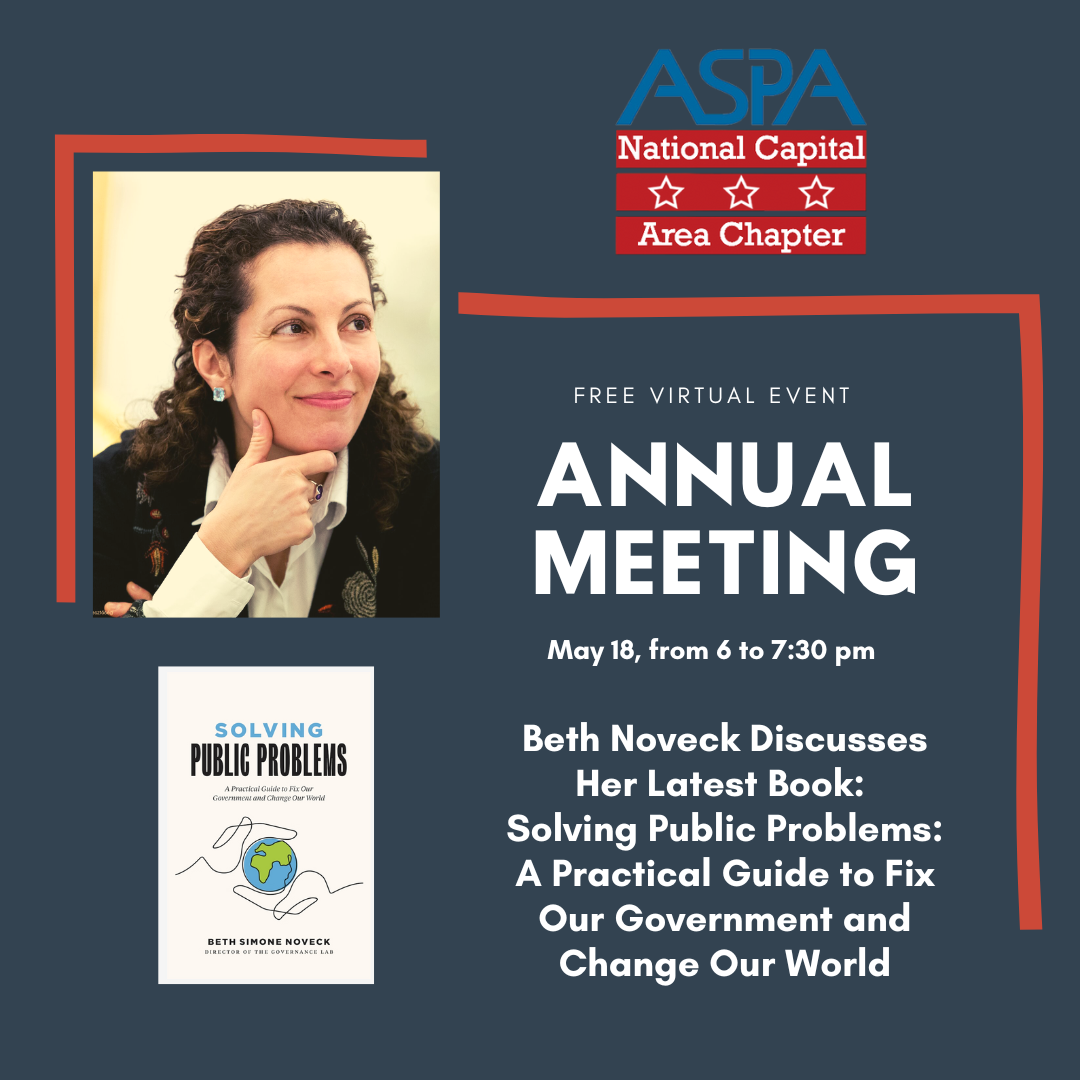
In May ASPA-NCAC held our 2023 Annual Conference on zoom!

Our keynote speaker was Beth Noveck, a professor at Northeastern University, where she directs the Burnes Center for Social Change and its partner project, The Governance Lab and its MacArthur Research Network on Opening Governance. She is the author of Solving Problems: How to Fix Our Government and Change Our World (Yale Press 2021).

It was a pleasure having Beth speak to us about her book and have a discussion.

We also awarded our Essay Contest winners with their awards and heard from them about their papers.

Included in our Annual Meeting portion of the evening was the presentation of an NCAC Award.

You can watch a recording of our event below.

[/vc_column_text][/vc_column][/vc_row][vc_row][vc_column][vc_video link=”https://youtu.be/yAgBjmrUEK0?si=HUMN-s5cakEG1kFj” title=”ASPA NCAC 2023 Annual Meeting”][/vc_column][/vc_row]

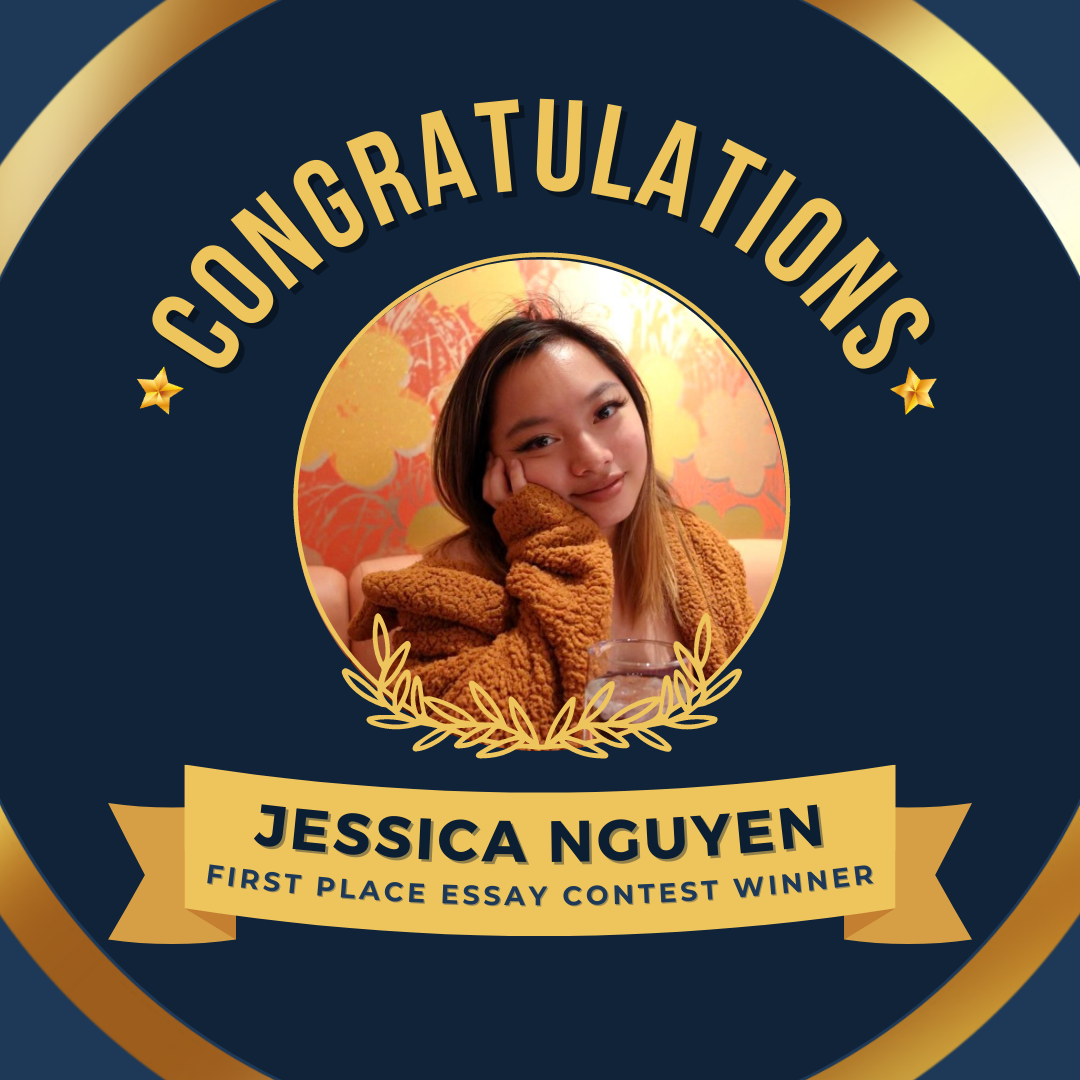
Jessica Nguyen Wins First Place in the 2022-2023 Student Essay Contest

NCAC congratulates Jessica Nguyen for winning First Place of the National Capital Area Chapter’s (NCAC) 2022-2023 Public Administration Student Essay Contest for her essay Mitigating Maternal Mortality in Maryland: Integrating Midwives into State Medicaid System to Reduce Racial Disparity!

Along with the distinction of the essay winning the Chapter’s Essay Contest, Jessica will receive a cash award of $2,000 that we hope will go toward furthering your education and a three-year membership to the American Society for Public Administration.

Jessica joined us at our Chapter’s Annual Meeting on May 18 to discuss her essay and express her gratitude for being selected. You can view the recording of our Annual Meeting here.

Congratulations, Jessica, on winning First Place for your essay in our Chapter’s 2022-2023 Student Essay Contest!

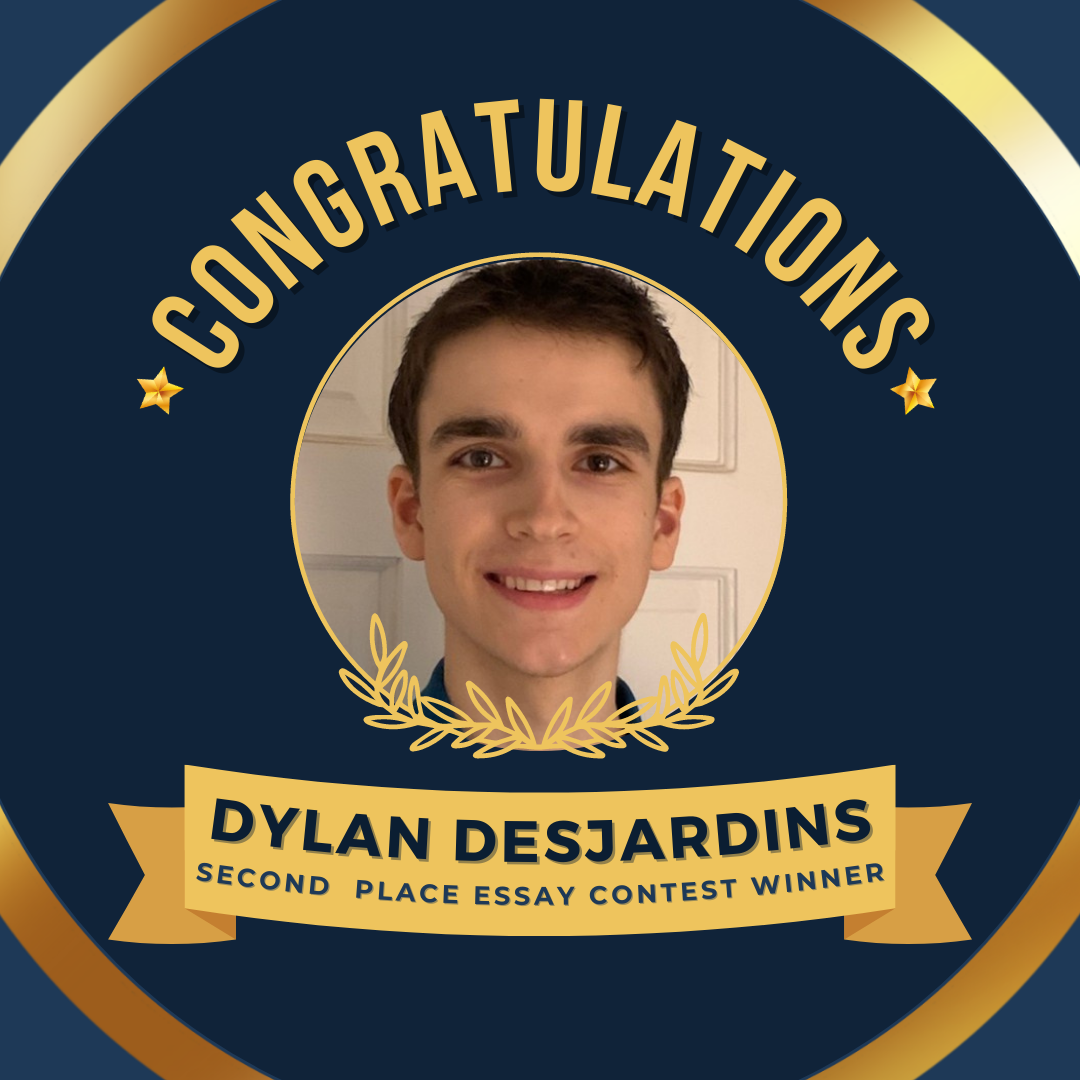
Dylan Desjardins Wins Second Place in the 2022-2023 Student Essay Contest

[vc_row][vc_column][vc_column_text]NCAC congratulates Dylan Desjardins for winning Second Place of the National Capital Area Chapter’s (NCAC) 2022-2023 Public Administration Student Essay Contest for his essay Open Algorithms: Moving Away from “Magic 8 Ball” Governance

Along with the distinction of the essay winning the Chapter’s Essay Contest, Dylan will receive a cash award of $1,500 that we hope will go toward furthering your education and a three-year membership to the American Society for Public Administration.

Dylan joined us at our Chapter’s Annual Meeting on May 18 to express his gratitude for being selected. You can view the recording of our Annual Meeting here.

Congratulations, Dylan, on winning Second Place for you essay in our Chapter’s 2022-2023 Student Essay Contest![/vc_column_text][/vc_column][/vc_row]

Call for Board Nominations

[vc_row][vc_column][vc_column_text]Are you interested in joining the NCAC Board? 

Fill out our nomination form below.
To learn more about NCAC and our current board, click here.

[/vc_column_text][vc_btn title=”Nominations Form” color=”danger” align=”center” link=”url:https%3A%2F%2Fdocs.google.com%2Fforms%2Fd%2Fe%2F1FAIpQLSeS48dByCh35D-POGytjyqZPjuBOYWvHWvxBzo1OtLQwXhXsQ%2Fviewform”][/vc_column][/vc_row][vc_row][vc_column][vc_empty_space][/vc_column][/vc_row]

Categories: Latest News

Nominate Yourself or a Peer for an NCAC Award

[vc_row][vc_column][vc_column_text]

Each year NCAC accepts nominations for our two signature awards, the National Capital Area Chapter Award for Outstanding Public Service and the Frances Kelsey Award.

[/vc_column_text][vc_btn title=”Award Nomination Form” color=”danger” align=”center” link=”url:https%3A%2F%2Fdocs.google.com%2Fforms%2Fd%2Fe%2F1FAIpQLSdcU6zVE0ZJFAWQIzpTxBfGPj3TkrouUjqLMRdvFg6JNN8SVQ%2Fviewform|target:_blank”][/vc_column][/vc_row][vc_row][vc_column][vc_empty_space][/vc_column][/vc_row]

Categories: Uncategorized Tags: Tags: , , ,

NCAC Board Member Sits on Panel entitled “Permission to Practice: Public Service Boundary Spanning”at NECoPA

[vc_row][vc_column][vc_column_text]

One of our NCAC Board Members, Connie Berhane, recently sat on a panel at the Northeast Conference on Public Administration (NECoPA) annual conference, “Permission to Practice: Public Service Boundary Spanning.”  She presented on her contributions to a 2021 ebook project by the same name, which involved the collaborative production of original written content and video roleplays by nine practitioners and pracademics in Colorado, Ohio, Rhode Island, Texas, and the Washington, DC Metro Area.

Connie developed a script for the roleplay of an information interview she conducted the year before, turning it into a teaching tool.  She also was the subject of a recorded interview in which she explained how she used boundary spanning to uncover new avenues for career growth.  Her main takeaway for attendees was not to be afraid to reach out to a person or organization to seek information or request information interviews.  Check out the ebook and NECoPA session!

Ebook and videos: https://seniorfellowsandfriends.org/permission-to-practice-public-service-boundary-spanning

NECoPA session: https://youtu.be/jnNPDZAGybI

This video begins with a casual chat before the session starts.

[/vc_column_text][/vc_column][/vc_row][vc_row][vc_column][vc_separator][/vc_column][/vc_row][vc_row][vc_column][vc_column_text]

         By NCAC Board Member Connie Berhane

[/vc_column_text][/vc_column][/vc_row]

Categories: ASPA News, Policy Tags: Tags: , , , ,