From the States to Washington: How Workforce Innovation Can Strengthen Public Service
ASPA National Capital Area Chapter explores skills-based hiring, physician licensing reform, and what state “laboratories of democracy” can teach the federal government
By Ryan Heimer, NCAC Board Member
Watch the recording of the event here: https://aspancac.org/recording-of-policy-innovation-in-the-states-ncac-webinar/
What can Washington learn from the states?
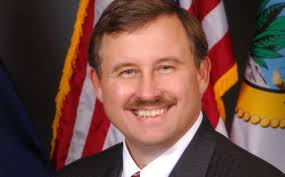
That question framed a recent ASPA National Capital Area Chapter conversation with Jonathan Wolfson, a public policy developer, legal advisor, policy advocacy strategist, and former senior government executive. The discussion examined an increasingly important idea in public administration: some of the most consequential innovations in government do not begin in Washington. They emerge in states, where policymakers can experiment with new approaches, learn from implementation, and provide lessons that may eventually inform national policy.
Wolfson focused particularly on two workforce challenges with implications far beyond state government: expanding skills-based hiring by removing unnecessary college-degree requirements and creating new licensing pathways for physicians trained and licensed outside the United States.
Together, the two examples offered a broader lesson for public administrators. Workforce policy is not simply an HR function. It is increasingly a question of government capacity: Who can serve? What qualifications actually matter? How can the government reach overlooked talent? And how do we maintain standards while removing barriers that no longer serve the public interest?
States as Laboratories of Democracy
Wolfson began with the familiar description of states as the nation’s “laboratories of democracy.” Across health care, artificial intelligence, procurement, social programs, and workforce policy, states have room to try different approaches to common problems.
That experimentation matters because the stakes of trying something new nationally can be enormous. A state can test an approach on a smaller scale, discover weaknesses, adjust implementation, and give other governments evidence to consider before following its lead.
Wolfson emphasized that this willingness to experiment crosses partisan lines: both Republican-and Democratic-led states have pursued innovative approaches when policymakers identify a problem and see an opportunity to address it.
The result is not that every state innovation succeeds. The value is that experimentation creates knowledge.
During the conversation, Wolfson pointed to Tennessee, Utah, and Washington State as examples of states that, in his assessment, have demonstrated a willingness to test new approaches. He also observed that smaller states can sometimes have advantages as policy innovators because experimentation can occur at a more manageable scale before a policy is considered elsewhere.
That brings the conversation directly to workforce policy.
Breaking the “Paper Ceiling”
For decades, a bachelor’s degree became a default qualification for many positions, even when the work itself did not necessarily require four years of college.
Wolfson highlighted the growing movement toward skills-based hiring, in which employers examine what a person can actually do rather than using a degree as a universal proxy for ability.
One example came from Maryland. Wolfson recounted the case of an experienced IT security professional who had worked for the National Security Agency and came from a military background but lacked a college degree. When he sought a position with Maryland state government, the degree requirement made him ineligible despite his experience. The case raised a straightforward question: if someone demonstrably possesses the necessary skills, why should the absence of a degree automatically close the door?
The concept has sometimes been described as breaking the “paper ceiling”—the barrier workers face when they possess relevant skills gained through military service, apprenticeships, employment, or other routes but lack the credential traditionally used to screen applicants.
The policy does not mean eliminating education requirements everywhere. A physician still needs appropriate medical credentials; an engineer performing work requiring professional engineering expertise still needs the necessary qualifications. The question is whether a degree requirement is actually connected to the work being performed.
Wolfson said states implementing these reforms have increasingly placed the burden on agencies to justify degree requirements rather than treating them as the default.
That distinction is important. Skills-based hiring is not about lowering standards. Properly implemented, it is about making standards more meaningful.
Implementation Matters as Much as the Policy
Removing a degree requirement on paper is relatively easy. Building a hiring system capable of evaluating skills is much harder.
That point became an important part of the ASPA discussion.
Wolfson identified leadership as one of the key ingredients. In states where governors and senior officials treated skills-based hiring as a genuine management priority—not merely an executive order or announcement—agencies began examining open positions, reconsidering job descriptions, and determining which qualifications were truly necessary.
He cited Utah, Virginia, Maryland, and Colorado in discussing this implementation work. Maryland, for example, developed an internal dashboard to track the process of eliminating unnecessary degree requirements.
This gets to the heart of public administration. Policy announcements alone do not produce outcomes. Implementation requires leadership, management capacity, measurement, and people willing to do the less visible work of translating a reform into everyday operations.
It also requires agencies to answer a deceptively difficult question:
What skills does this job actually require?
As artificial intelligence becomes increasingly capable of helping applicants answer traditional knowledge-based assessments, that question will become even more important. Wolfson noted that governments may have to rethink how they verify skills in an environment where AI can generate answers that previously required an applicant to possess the information personally.
A Second Workforce Problem: America Needs Doctors
The same underlying principle—looking beyond traditional pathways while protecting standards—appeared in Wolfson’s second major example: physician licensing.
The United States faces significant physician workforce challenges, particularly in primary care and rural communities. Wolfson argued that one potential source of talent has historically been difficult to access: physicians who are already trained and licensed to practice medicine outside the United States.
Historically, state licensing systems generally required internationally licensed physicians to repeat a U.S. residency before becoming fully licensed, even when they had substantial professional experience abroad. Exceptions existed, but they were limited.
States have begun experimenting with another model.
Wolfson described laws creating pathways through which internationally licensed physicians can work toward full state licensure when sponsored by qualifying health care institutions and practicing under specified supervision. The approach attempts to maintain safeguards while recognizing that a physician’s previous training and professional experience may have substantial value.
He illustrated the human consequences with the story of a Ukrainian refugee in Virginia who had been a psychiatry professor and physician in Ukraine but, because he could not practice medicine under the licensing structure then applicable, was instead advertising power-washing services in his neighborhood.
For public administrators, the example raises a larger question: How much talent already exists in our communities that our institutions simply do not know how to use?
Human Capital Is Mission Capacity
Perhaps the most consequential theme of the evening was that workforce policy cannot be separated from the government’s ability to accomplish its mission.
Wolfson described human capital strategy as increasingly central to governing because the government ultimately needs people with the appropriate knowledge and skills to turn policy into action. At the same time, an aging workforce means experienced employees will continue leaving public service, taking years of institutional knowledge with them. Recruiting and developing the next generation therefore becomes part of maintaining government capacity itself.
Technology—including AI—may change how that workforce operates, but it also creates new challenges.
One participant raised concerns about critical thinking in an AI-enabled workplace. Wolfson responded that experienced professionals often recognize questionable AI output because they already possess enough subject-matter knowledge to know when something does not look right. Someone without that foundation may accept an incorrect answer with much greater confidence.
That makes mentorship, professional development, and knowledge transfer increasingly important—not less important—in an AI age.
Wolfson reflected on his own early professional experiences, when more experienced colleagues invited him into meetings and activities that allowed him to observe how the work was actually done. Those informal opportunities helped build judgment that cannot always be captured in a manual, job description, or AI prompt.
A Stronger Workforce Requires a Wider Door
The two central reforms discussed during the event may initially seem unrelated. One concerns state hiring requirements; the other concerns physician licensing. But they share a common principle.
Government should maintain meaningful standards while continually asking whether yesterday’s barriers are still necessary to achieve today’s public purposes.
Removing an unnecessary bachelor’s-degree requirement does not mean education has no value. Creating alternative pathways for internationally trained physicians does not mean abandoning medical standards. Both policies instead ask public institutions to distinguish between a qualification that protects quality and a qualification that has become an unnecessary barrier.
That is a difficult distinction—and precisely the kind of question public administrators are called upon to answer.
The conversation also demonstrated why federalism remains an important source of policy learning. States can experiment. Federal agencies can contribute data, expertise, and scale.
Local governments can identify where policies meet the realities of communities. Researchers and practitioners can evaluate results and share lessons across jurisdictions.
As the ASPA NCAC discussion showed, the most useful policy innovation may not always be a dramatic new program. Sometimes innovation begins with a simpler question:
What is standing between capable people and the opportunity to serve—and does it still need to be there?
For a public sector confronting workforce shortages, technological disruption, demographic change, and growing demands for effective service delivery, the answer could shape not only how the government hires, but how well the government performs.